Gemstone jewelry is designed to last for generations, but daily wear inevitably exposes it to dirt, skin oils, cosmetics, and environmental pollutants. Over time, these residues can dull a gemstone’s brilliance and even weaken its setting. Proper cleaning not only restores beauty but also protects the structural integrity of both gemstones and precious metals.
This guide explains how to clean gemstone jewelry safely, which methods are suitable for home use, and which practices should be avoided to prevent accidental damage.
Before attempting to clean any piece of gemstone jewelry, it is essential to understand the nature of the materials involved. Not all gemstones react the same way to heat, chemicals, or mechanical stress.
While the Mohs hardness scale measures a gemstone’s resistance to scratching, it does not reflect toughness or stability. For example, diamonds rank highest in hardness, yet they can still chip or fracture under sudden impact. Conversely, softer gemstones may be structurally tough but chemically sensitive.
Many gemstones undergo treatments to improve color or clarity, including:
These enhancements may be damaged by aggressive cleaning methods such as ultrasonic cleaners, steam, or harsh chemicals. Emeralds, in particular, are commonly oil-treated and require gentle care.
For most gemstone jewelry, the safest and most widely recommended cleaning approach uses mild materials and gentle handling.
Mix warm (not hot) water with a few drops of mild liquid dish soap. Avoid detergents containing bleach, ammonia, or abrasive additives.
This solution is suitable for most untreated gemstones and precious metals.
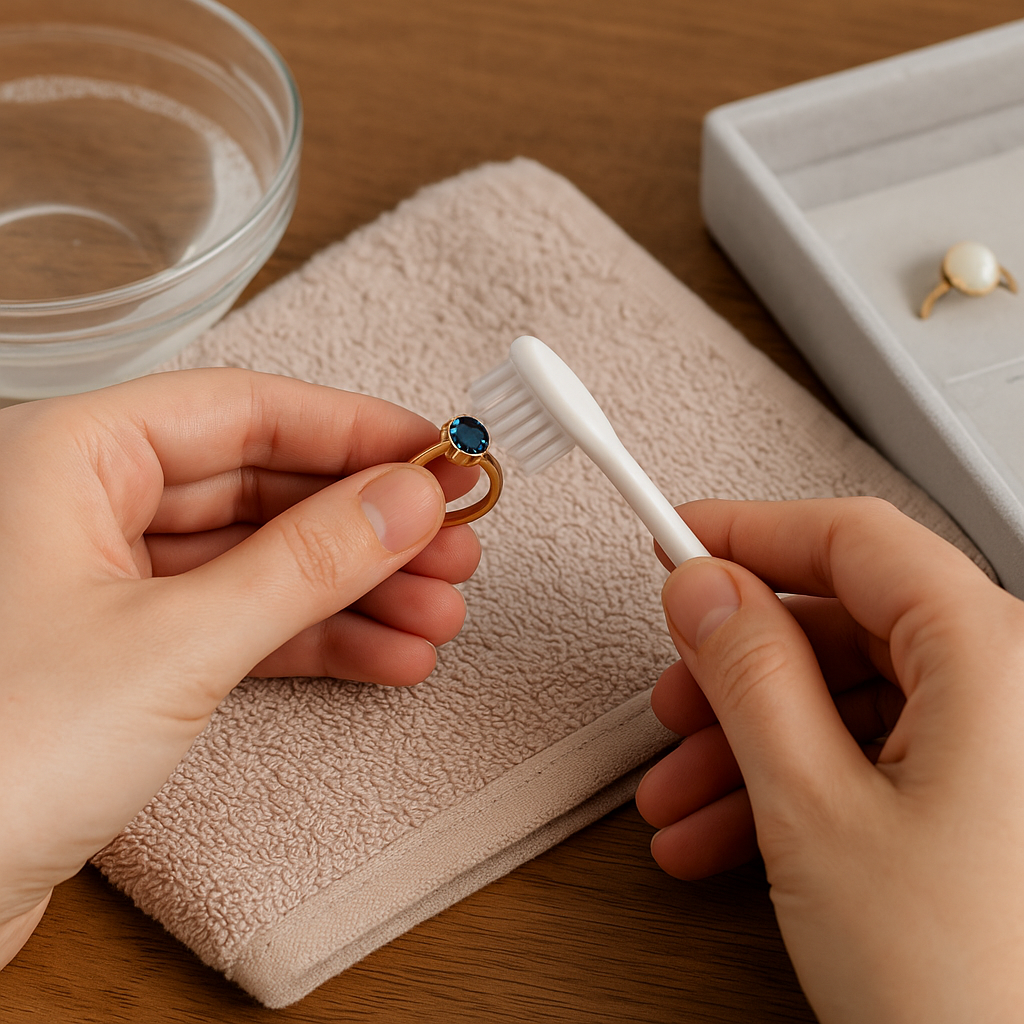
Using a soft-bristled toothbrush or cosmetic brush:
Never use hard brushes, scouring pads, or abrasive tools.
Rinse the jewelry thoroughly under lukewarm running water to remove soap residue. Be sure to use a strainer or bowl to prevent accidental loss.
Dry the piece with a soft, lint-free cloth. Allow it to air dry completely before storage.
Avoid sudden temperature changes, as thermal shock can cause fractures in sensitive gemstones.
Jewelry professionals often place cleaned pieces in dry hardwood shavings to absorb moisture evenly without leaving water spots. This method is especially useful for intricate settings.
Not all gemstones tolerate the same cleaning methods. Extra caution is necessary for the following categories.
Ultrasonic cleaners produce high-frequency vibrations that can loosen settings or worsen internal fractures. Avoid ultrasonic cleaning for:
Organic gemstones are especially sensitive to moisture and chemicals. These include:
Clean these materials only with a slightly damp, soft cloth and dry immediately. Never soak them in water.
Household cleaners can be extremely damaging to gemstones and metals. Avoid:
These substances may etch gemstone surfaces, weaken metal alloys, or strip treatments.
Proper daily habits can significantly reduce dirt buildup and prolong the life of your jewelry.
Apply makeup, perfume, hairspray, and lotions before putting on jewelry. Cosmetic residues are one of the primary causes of gemstone dullness.
Take off gemstone jewelry before:
Sweat, impact, and chemicals can all cause long-term damage.
Check prongs and settings periodically. Loose stones are more likely to fall out during cleaning if damage goes unnoticed.
For high-value, antique, or heavily included gemstones, professional cleaning is strongly recommended. A trained jeweler can:
Professional maintenance ensures safety and preserves long-term value.