Imagine walking through the bustling markets of ancient Babylon, where traders displayed exotic stones from distant lands. Among them was bloodstone, a dark green gemstone dotted with red flecks that immediately caught the eye. Known then as heliotrope, this stone carried stories of power and mystery. Ancient cultures believed that bloodstone held the blood of heroes and gods within its veins, giving it protective and healing powers.
In medieval Europe, bloodstone became known as the “martyr’s stone.” Legends told that the red spots were drops of blood from Christ, and people carried the stone for courage and divine protection. Knights and warriors wore bloodstone rings into battle, believing the gem would give them strength and shield them from harm.
Over the centuries, bloodstone traveled across continents, appearing in royal collections, churches, and apothecaries, where it was used in medicinal practices. Its reputation as a stone of courage, vitality, and spiritual power spread, making it a prized gem for both its beauty and its symbolism.
Even today, bloodstone crystals and jewelry continue to inspire collectors and spiritual practitioners alike. From ancient myths to modern meditation practices, the story of bloodstone is a journey through history, culture, and human imagination—a gemstone whose legend is as striking as its green-and-red color.
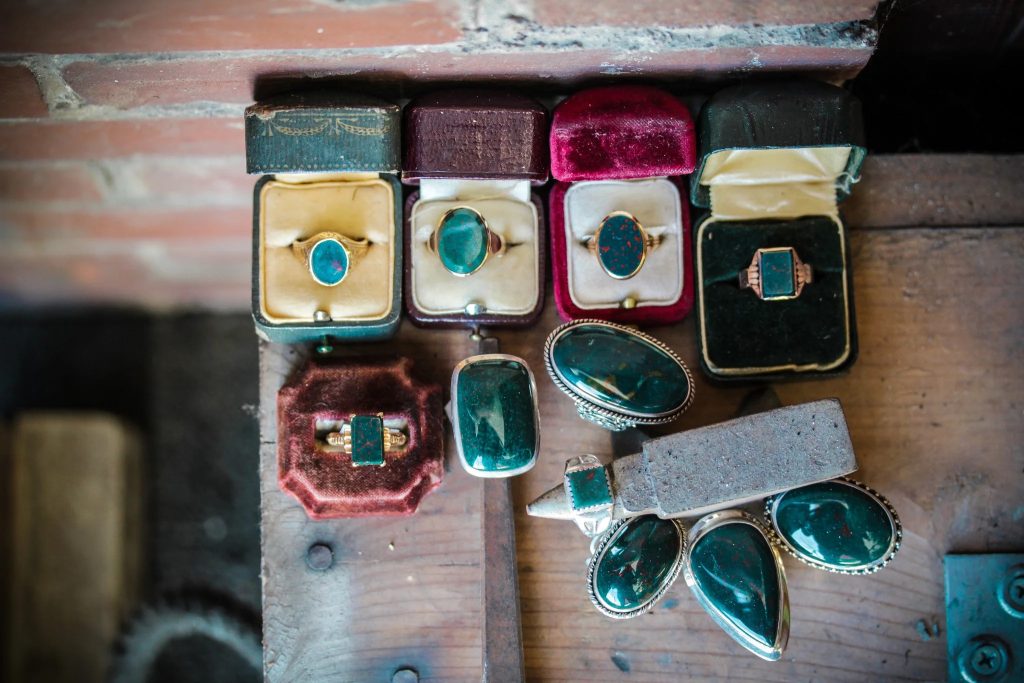
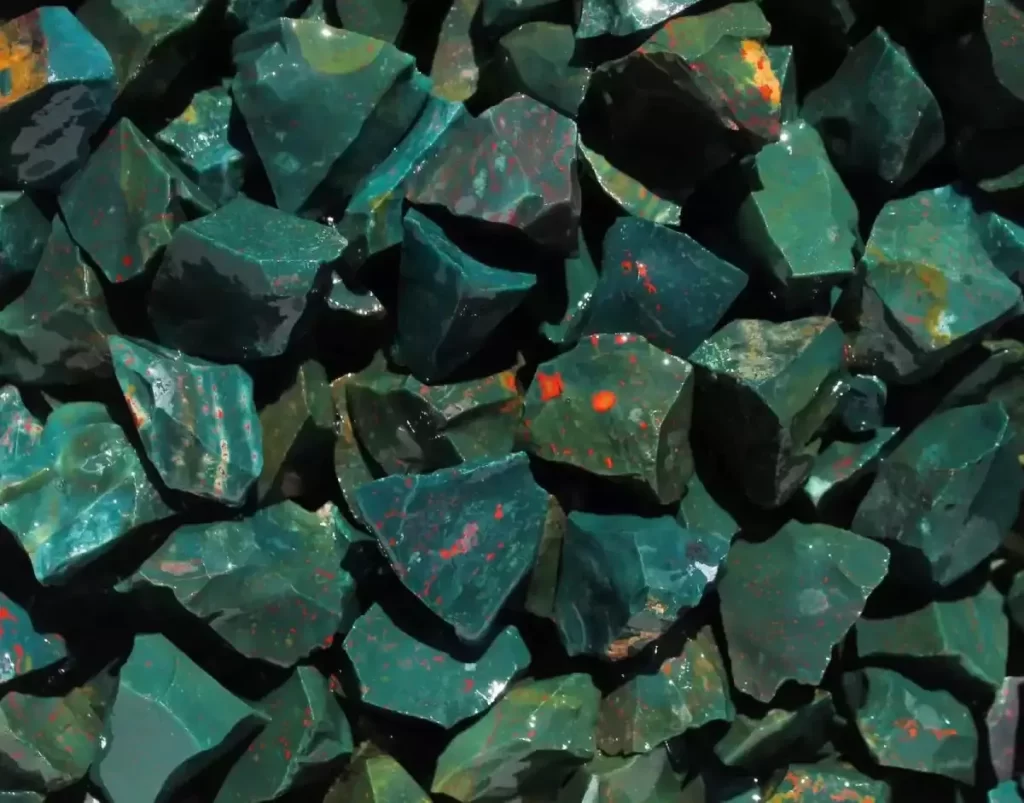
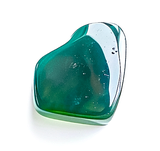
The defining feature of bloodstone is its deep green body color dotted with red flecks, which resemble drops of blood—hence the name. The combination of dark green and bright red makes it stand out among other gemstones. High-quality bloodstone has a rich, uniform green with scattered, vivid red spots and minimal dull areas.
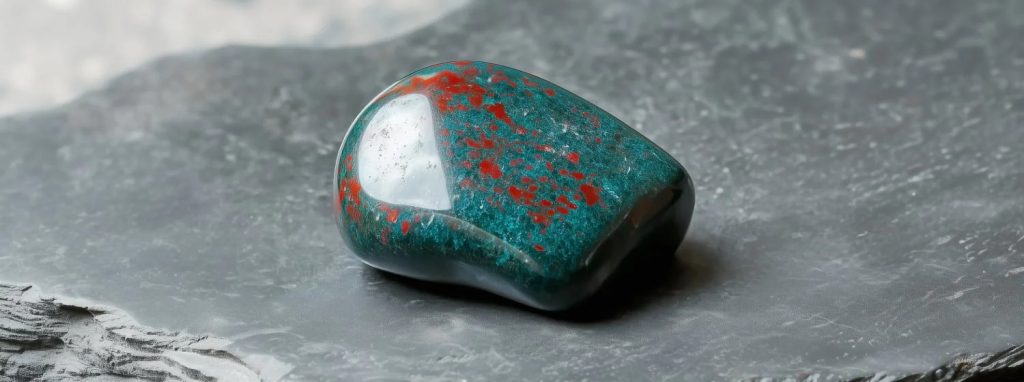
Bloodstone meaning is deeply rooted in history, culture, and legend, making it one of the most symbolic gemstones in the world. Known also as heliotrope, bloodstone is a dark green jasper with distinctive red flecks of iron oxide, which have historically been associated with vitality, courage, and healing.
Ancient civilizations prized bloodstone for both its beauty and its perceived powers. In India and Greece, bloodstone was considered a warrior’s stone, believed to enhance strength and endurance in battle. According to The Crystal Bible by Judy Hall (2003), bloodstone was historically used to purify the blood, stop bleeding, and promote physical health—hence its enduring name.
During the Middle Ages in Europe, bloodstone was called the “martyr’s stone” because legends claimed that the red spots were drops of Christ’s blood that fell on green jasper at the crucifixion. Knights and clergy often wore bloodstone rings or carried bloodstone crystals as amulets for courage, protection, and spiritual guidance (Bonewits, 2011).
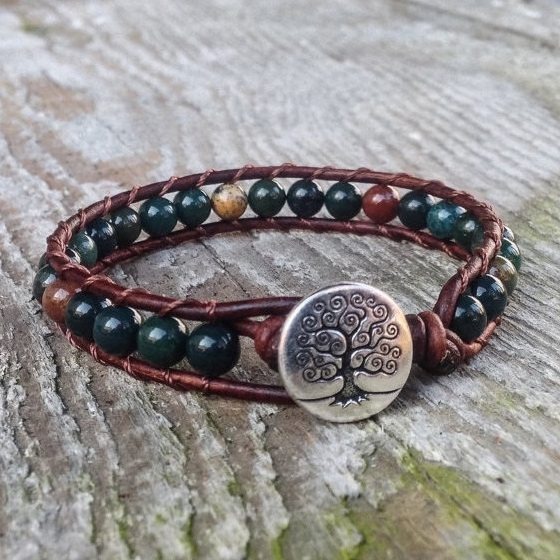
In modern crystal and gemstone practices, the bloodstone meaning extends beyond physical protection. It is considered a grounding and energizing stone that promotes clarity, vitality, and self-confidence. People wear bloodstone jewelry such as rings, bracelets, or pendants to carry its symbolic energy daily, while bloodstone crystals are used in meditation, energy work, or home decor to enhance focus and resilience.
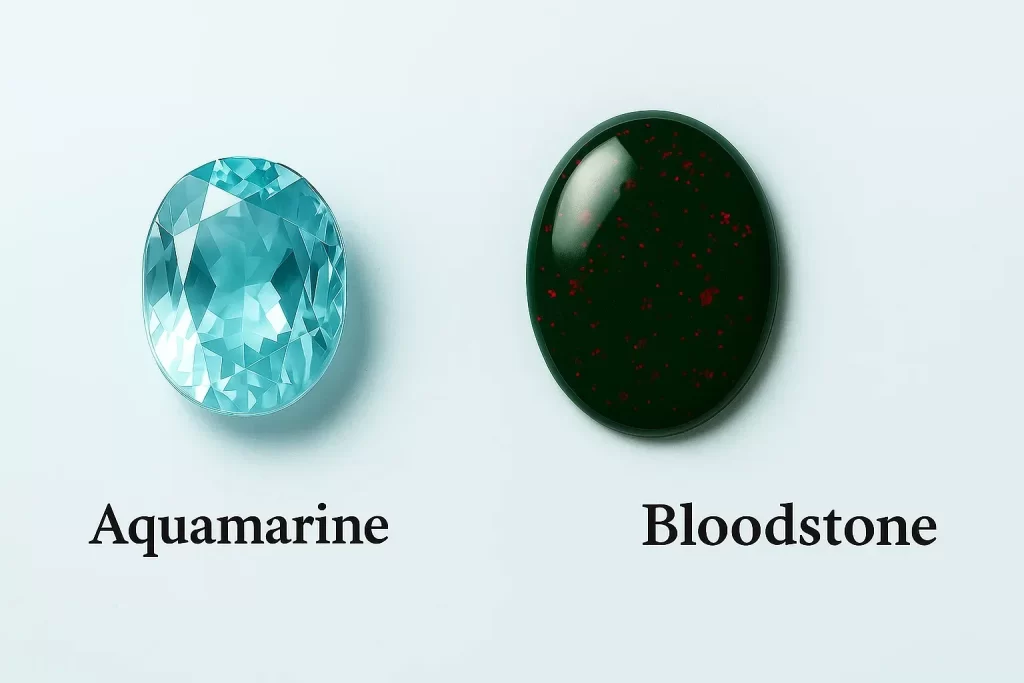
Bloodstone is also recognized as the traditional March birthstone, adding a personal and symbolic significance for those born in this month. Its combination of dark green and bright red makes it visually striking while maintaining centuries of spiritual and cultural resonance.
Bloodstone is recognized as the traditional March birthstone, making it a meaningful choice for anyone born in that month. Known as bloodstone birthstone, it symbolizes strength, protection, and grounding energy. Gifting someone March birthstone bloodstone jewelry is a thoughtful way to combine beauty with personal significance.
Bloodstone is a type of jasper, a form of chalcedony, which is a microcrystalline variety of quartz. Its unique green color comes from minerals like chlorite or amphibole, while the distinctive red spots are caused by iron oxide inclusions.
The formation of bloodstone begins deep within the Earth, where silica-rich fluids fill cracks and cavities in volcanic rocks or sedimentary deposits. Over millions of years, these fluids slowly crystallize to form dense, hard jasper. During this process, iron compounds present in the surrounding rock can oxidize, creating the red flecks that give bloodstone its characteristic appearance.
Environmental factors such as heat, pressure, and mineral content influence the final color and pattern of each stone, which is why no two bloodstone crystals or gemstones are exactly alike. High-quality bloodstone is dark green with vivid red spots, and stones with evenly distributed red flecks are considered the most valuable for bloodstone jewelry like rings, bracelets, and necklaces.
Because bloodstone forms over millions of years through a combination of geological and chemical processes, each piece carries a unique natural history, connecting it to the Earth’s deep past.